en
en RU
RU PL
PL LT
LT




















 |
 |
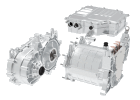
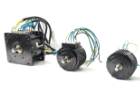
QS-273 (12000W) electric motor for car


|
Carrier
|
Country
|
| Delivery price: | € 50,00 *incl. VAT |
| Delivery time: | 24 h. |
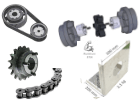
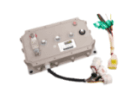
QS-273 (12000W) Electric Motor for Car – Powerful BLDC Motor for Advanced EV ConversionsThe QS-273 12000W electric motor for car is a high-power BLDC motor developed for demanding electric vehicle conversion projects and custom electric propulsion systems. With a rated power of 12 kW and compatibility with a broad range of traction-system voltages, it provides vehicle designers with considerable freedom when developing a drivetrain for a car, specialist vehicle, utility platform or individually engineered electric machine. The motor belongs to the QS-273 family and combines substantial propulsion capability with the flexibility required in custom EV development. Instead of limiting the builder to one fixed electrical architecture, the motor can be incorporated into systems using different battery voltages and matched with a controller selected for the specific performance targets of the project. This makes the QS-273 12000W particularly suitable for experienced builders, conversion workshops and engineers who need more power than lightweight e-mobility systems can provide. 12 kW Power for More Demanding Electric VehiclesA 12 kW electric motor represents a significant step above low-power conversion systems designed for bicycles, scooters or very light vehicles. The additional power can be valuable in applications where the vehicle has greater mass, needs stronger acceleration or is expected to maintain useful performance on gradients. However, power should never be selected from a catalogue without analysing the actual vehicle. The complete operating mass, wheel size, expected top speed, acceleration requirements, gradient capability and intended duty cycle all influence the amount of power needed. A lightweight custom EV used primarily at moderate speeds may place relatively low continuous demand on the motor, whereas a heavier vehicle operating on steep roads can require substantial power for extended periods. The QS-273 12000W should therefore be selected as part of an engineering calculation rather than simply because a larger motor appears more attractive. BLDC Technology for Modern Electric PropulsionThe QS-273 uses brushless DC technology. In a BLDC motor, electronic control replaces the mechanical brush commutation used in traditional brushed DC motors. A compatible controller switches current between the motor phases according to rotor position and demanded output. This provides accurate electronic regulation of torque and speed. For an EV conversion, electronic motor control also creates opportunities for functions such as configurable acceleration response, reverse operation and regenerative braking when these functions are supported by the selected controller and the rest of the electrical system. The drivetrain can therefore be adapted much more precisely to the characteristics of the vehicle. Multiple Supply-Voltage OptionsMiromax lists the QS-273 12000W for supply voltages including: 48 V, 60 V, 72 V, 96 V, 120 V and 144 V. This wide range makes it possible to design the motor into several different traction-system architectures. Voltage selection has important consequences. For the same required power, a higher-voltage system can operate with lower current than a lower-voltage alternative. Lower current can reduce voltage drop and make high-power transmission easier to manage, although the actual design still depends on cable length, conductor size, connectors and controller characteristics. Increasing voltage also raises electrical safety requirements. Components such as contactors, fuses, service disconnects, DC/DC converters and chargers must all be rated for the actual maximum voltage present in the system. The battery's fully charged voltage must be considered, not only its nominal designation. Understanding kV and Motor RPMThe product configuration is identified with a kV value that describes motor speed in relation to applied voltage. This parameter is important when calculating drivetrain gearing. Electric vehicle design should not focus on achieving the highest possible motor RPM. Instead, the goal is to ensure that the motor operates in a useful part of its speed range when the vehicle is travelling at its intended road speed. A motor turning much faster than the wheel generally requires a reduction stage. The correct ratio determines how effectively motor speed is transformed into wheel torque. A ratio designed for high road speed may reduce acceleration and hill-climbing ability, while a shorter ratio can improve wheel torque but limit maximum vehicle speed. This is why kV, voltage, wheel diameter and gearing need to be analysed together. High Torque and Electric Vehicle AccelerationElectric motors are particularly useful in traction applications because of their ability to generate substantial torque from relatively low rotational speeds. The QS-273 product page includes torque information alongside calculations for different supply voltages. In practical vehicle design, however, motor torque is only one part of the final result. The mechanical reduction ratio determines how much torque is ultimately available at the wheel. Vehicle mass then determines how that wheel force translates into acceleration. This means that a correctly geared 12 kW drivetrain may provide better real-world performance than a higher-powered motor connected through an unsuitable transmission. Good drivetrain design therefore starts with wheel requirements and works backwards toward the motor rather than selecting the motor first and attempting to adapt everything else afterwards. Applications for the QS-273 12000WThe 12 kW version can be considered for more demanding electric car conversions, specialist EVs, lightweight utility vehicles and custom electric machines. It may also be suitable for experimental or prototype platforms where a flexible high-power BLDC solution is required. The exact suitability depends on the vehicle. A 12 kW motor in a lightweight platform can provide very different performance from the same motor installed in a substantially heavier vehicle. Aerodynamic resistance also becomes increasingly important as speed rises. At lower speeds, vehicle mass and rolling resistance have a strong influence. At higher road speeds, aerodynamic drag requires progressively more power. The target speed should therefore be defined before final drivetrain selection. Choosing a Controller for a 12 kW MotorController selection is especially important in a drivetrain of this power level. The controller needs to support the selected battery voltage and provide appropriate current to the motor. It should also be compatible with the motor's position-sensing and control requirements. Current limits must be selected carefully. Increasing current can improve low-speed torque and acceleration, but it also increases thermal load on the motor, controller, battery and cables. A system in which the controller is capable of supplying more current than the rest of the drivetrain can safely handle is not well balanced. The correct controller is therefore one that allows the QS-273 to deliver the required vehicle performance while remaining within the safe operating limits of every component. Battery Requirements for a High-Power ConversionA 12 kW drivetrain requires a traction battery capable of supplying substantial electrical power. The battery must provide both the correct voltage and sufficient current capability. The BMS also needs to support the expected discharge current without unnecessary shutdowns or excessive thermal stress. Battery capacity should be calculated separately from motor power. Capacity determines the amount of stored energy and therefore has a strong influence on driving range. A vehicle does not continuously consume the motor's full rated power during normal operation. Energy consumption changes with speed, acceleration, gradient, rolling resistance, aerodynamics and driving style. An appropriate battery can therefore only be selected after the expected duty cycle has been defined. Battery Placement and Vehicle Weight DistributionIn a converted car, battery packaging can be one of the most difficult design tasks. Larger battery packs can provide increased range, but they also add weight. The location of that weight affects vehicle balance, suspension load and handling. Battery modules should therefore be positioned with consideration for structural mounting, protection against mechanical damage and access for servicing. The traction battery should not be treated simply as an electrical component. It becomes one of the major structural and mass elements of the converted vehicle. For that reason, motor selection and battery packaging should ideally be planned at the same stage of the project. Mechanical Connection to the DrivetrainThe QS-273 motor needs a mechanical system capable of transferring its torque to the driven wheels. Depending on the project, this may involve a custom reduction gearbox, belt system, chain transmission, differential or another drivetrain architecture. The connection between the motor shaft and driven system must maintain accurate alignment. Misalignment can generate vibration and unnecessary radial or axial loads. Couplings, shafts, bearings and mounting brackets should all be selected for the maximum loads expected during acceleration and deceleration. A conversion project should also consider how torque reactions are transferred into the vehicle chassis. The motor mounting structure must remain rigid under changing load conditions. Thermal Management Matters at 12 kWAlthough electric motors can achieve high efficiency, some energy is always converted into heat. Thermal load becomes especially important when high current is used for extended periods. Repeated acceleration, steep gradients, heavy payloads and high ambient temperature can all increase operating temperature. For this reason, thermal behaviour should be verified in realistic driving conditions. Short tests at low load cannot fully demonstrate how the drivetrain will behave during prolonged operation. The installation should provide suitable conditions for heat dissipation around the motor and controller. Where additional cooling solutions are required, they should be incorporated into the design before the final mechanical layout is completed. Regenerative Braking in a Custom EVWhen the chosen controller and battery system support regenerative braking, the electric motor can assist with vehicle deceleration while returning part of the recovered energy to the traction battery. The effectiveness of regeneration depends on several factors. The battery must be able to accept charging current, the controller must support the required operating mode and the vehicle controls must be configured appropriately. Regeneration may also need to be restricted when the battery is already fully charged. Mechanical brakes therefore remain an essential independent safety system regardless of the regenerative functionality available from the drivetrain. High-Voltage Protection and InstallationAs the selected system voltage increases, the need for proper electrical protection becomes increasingly important. The traction circuit should incorporate appropriately rated fuses, contactors, connectors and disconnect devices. Cable cross-sections must be chosen according to current, cable length and installation conditions. All high-voltage conductors should be installed in a way that protects them from abrasion, vibration, heat and accidental mechanical damage. The design should also provide a clear method for isolating the battery during servicing. A professional EV conversion is not defined only by motor performance. Electrical protection and safe maintainability are equally important elements of the final system. A Strong Foundation for Advanced Electric Vehicle ProjectsThe QS-273 12000W electric motor is designed for projects that require a powerful and configurable BLDC propulsion solution. Its 12 kW rating and broad range of possible system voltages make it suitable for custom drivetrains where the designer needs control over battery architecture, controller selection and mechanical transmission. The motor can become the central component of an efficient electric propulsion system, but the quality of the final result depends on the complete design. Battery capability, BMS limits, controller configuration, wiring, protection, gearing, vehicle mass, wheel size and thermal conditions all need to be considered together. When these elements are properly matched, the QS-273 12000W can provide a flexible basis for a demanding electric vehicle conversion. Before beginning a project, the exact motor version, kV configuration, supply voltage and controller compatibility should be confirmed for the specific application. Careful system-level planning makes it possible to use the motor's capabilities effectively while creating a drivetrain that is practical, predictable and appropriately matched to the vehicle.
|

 EN
EN  RU
RU  PL
PL  LT
LT 




| UAB MIROMAX Pramonės g. 97 LT-11115, Vilnius www.miromax.lt |
Tel: +370 700 30 154 miromax@miromax.lt |
 |
 |
We are trusted by: