en
 RU
 PL
 LT


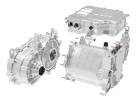
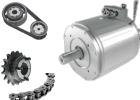
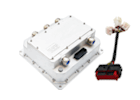








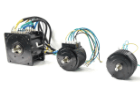

















 |
 |
Planetary gearbox TCB 090-3-S1-P2 | HPM
 More foto (1)
€ 71390 incl. 21% VAT
|
Carrier

|
Country
|
| Delivery price:
|
€ 6,00 *incl. VAT |
| Delivery time:
| 24 h. |
|
The TCB 090-3-S1-P2 | HPM planetary gearbox is designed for engineers and system designers who need to match the performance characteristics of an electric motor to the requirements of a driven mechanism. While a BLDC motor can operate efficiently across a wide speed range, machines, vehicles, and mechanical systems often require lower output speeds and correspondingly higher torque. A planetary gear reducer adjusts the relationship between rotational speed and torque within a mechanical drive system while accounting for efficiency losses and structural limitations. The model available from Miromax belongs to the category of gearboxes designed for brushless motor applications and can be considered for prototype development, industrial machinery, and electric mobility projects. Why Use a Planetary Gearbox with a BLDC Motor?A planetary gearbox uses a system of gears in which mechanical loads are transmitted through carefully arranged gear engagements. This construction is particularly valued in applications requiring compact dimensions, specific reduction ratios, and rigid torque transmission. Combining a planetary gearbox with a BLDC motor makes it possible to design a complete drive assembly. The motor generates torque, the controller regulates its operation, and the gearbox adjusts the rotational speed to meet the requirements of the driven equipment. However, a gear reducer does not automatically increase the total power of the system. Although the output torque may increase as rotational speed decreases, the available mechanical power remains limited by the motor's output and the efficiency losses occurring within the gearbox. This distinction is essential when designing reliable and efficient electric drive systems. Applications in Machinery, Electric Vehicles, and PrototypesA planetary gearbox for a BLDC motor can be used in conveyor drives, mobile robots, compact specialised vehicles, and mechanisms requiring precise rotational speed adjustment. In electric vehicle projects, engineers must consider several important factors, including vehicle weight, wheel radius, required starting torque, and expected loads when climbing slopes. In industrial automation, priorities may include motion repeatability, mechanical rigidity, and reliable performance during frequent changes in rotational direction. In each application, the requirements of the overall drive system should be evaluated separately from the technical specifications of the gearbox itself. Even if a particular application appears similar to an example described in a product catalogue, correct component selection requires mechanical calculations and verification of the exact gearbox configuration. This approach helps ensure that the selected planetary reducer meets the actual operating requirements rather than merely matching the general application category. Which BLDC Motors Can Be Used with This Gearbox?The Miromax product information identifies several motor families for which appropriately selected gearbox configurations may be available. These include:
This list provides a useful reference point when considering possible motor and gearbox combinations. However, it should not be interpreted as a guarantee that every version of these motors will fit the gearbox without adapters or the selection of a specific configuration. Before ordering, it is necessary to verify the motor shaft diameter and length, axial positioning method, mounting hole spacing, flange dimensions, installation orientation, and applicable load limits. If the intended motor is not included in the compatibility list, the safest approach is to provide its technical documentation for verification. Forcing mechanically incompatible components together can result in alignment problems, excessive vibration, premature bearing wear, or damage to the drive assembly. Axial and Radial Loads – Essential Technical ParametersThe Miromax product listing specifies maximum load values of approximately:
These specifications are important when designing a connection between the gearbox output shaft and a wheel, sprocket, coupling, or another power transmission component. However, these values should not be considered an independent guarantee of the durability of the complete mechanical system. Actual load capacity also depends on the location at which the force is applied, the dynamic characteristics of the load, and the mounting configuration. In chain-driven systems, for example, chain tension can generate significant radial loads on the output shaft. The position of the sprocket relative to the gearbox housing may also influence the loading conditions experienced by the bearings. If a project approaches the specified maximum load limits, additional verification with the manufacturer or supplier is essential. Correctly evaluating both axial and radial loads helps reduce the risk of premature wear and contributes to reliable gearbox operation. Gear Ratio Is Not Everything – Efficiency, Backlash, and DurabilitySelecting a planetary gearbox should never be based on the reduction ratio alone. Although the gear ratio determines the relationship between input and output rotational speeds, several other parameters are equally important. These include transmission efficiency, maximum permissible input speed, rated and peak torque, and angular backlash. In positioning applications, excessive backlash may reduce movement accuracy and repeatability. In electric vehicles, frequent load changes can result in jerking or uneven operation if the complete drive system is not properly configured. Operating temperature, lubrication type, and environmental conditions also influence gearbox durability. For example, a gearbox operating continuously in an industrial machine may experience different thermal and mechanical stresses than one used intermittently in a compact electric vehicle. All relevant specifications should be obtained for the exact TCB gearbox variant being considered. General technical information about planetary gearboxes may not accurately describe every configuration available within a product family. Installing the TCB Planetary Gearbox – Practical ConsiderationsA properly designed mounting system should provide rigid support, accurate shaft alignment, and convenient access for inspecting mechanical connections. The Miromax product description indicates that the gearbox can be installed in different orientations. However, the lubrication requirements and operating conditions must always be confirmed for the specific configuration being purchased. Incorrect mounting can lead to additional mechanical stress and reduced component lifespan. For example, a poorly aligned support bracket should not transfer unwanted forces to the motor housing. Similarly, the gearbox should not be mounted on a visibly distorted or uneven surface. Mounting bolts must be selected according to the applicable specifications, and all installation work should be carried out with the drive system safely disconnected and mechanically secured. In mobile applications, appropriate guards should also be provided to prevent users from coming into contact with rotating components. Accurate installation is essential for maintaining reliable torque transmission and reducing unnecessary mechanical wear. How to Calculate Gearbox Output Speed and TorqueIf the motor speed and gearbox reduction ratio are known, the output shaft speed can be estimated using a simple relationship. Output speed = Input speed ÷ Gear ratio For example, if a motor operates at 3,000 rpm and the gearbox has a 3:1 reduction ratio, the theoretical output speed is: 3,000 ÷ 3 = 1,000 rpm Theoretical output torque increases approximately in proportion to the reduction ratio. However, actual output torque must account for gearbox efficiency. Consider an illustrative calculation in which:
The estimated output torque is: 8 × 3 × 0.90 = 21.6 Nm This example demonstrates the calculation method and does not represent a declared performance specification for the TCB 090-3-S1-P2 gearbox. Actual calculations should use manufacturer-provided data and an appropriate safety factor for the intended application. Engineers should also verify the maximum permissible output torque and other gearbox operating limits rather than relying on theoretical torque multiplication alone. Verify the Product Code Before OrderingThe commercial product name identifies the gearbox as "TCB 090-3-S1-P2 | HPM", while the product code displayed in the Miromax store is "TCB90-3-S2-P2". This discrepancy should be clarified before placing an order. When contacting the supplier, it is advisable to provide a photograph of the motor nameplate, shaft dimensions, and the required drive specifications. The S1 and S2 designations should not automatically be assumed to represent identical configurations. This verification is especially important when the gearbox is intended to replace an existing component and must fit without modifications to the mounting geometry. Product page:TCB Planetary Gearbox – Miromax Before finalising the purchase, it is also worth confirming the selected mounting configuration, the components included in the package, and the current delivery conditions. Taking these precautions helps avoid compatibility problems and unnecessary modifications during installation. Who Is This Planetary Gearbox Designed For?The TCB 090-3-S1-P2 | HPM planetary gearbox may be of interest to BLDC drive system designers, companies developing electric vehicle prototypes, industrial automation integrators, and workshops modernising existing machinery. One of its main potential advantages is the ability to design the motor and gearbox as an integrated drive assembly. Instead of forcing an electric motor to operate directly at the rotational speed required by the driven equipment, engineers can use a gearbox to adapt the motor's characteristics to the application. However, the gearbox cannot replace proper motor cooling, suitable controller configuration, or a mechanically stable mounting system. It is one component of a complete drive system. For this reason, purchasing a planetary gearbox should ideally be preceded by preparing a technical requirements sheet covering:
This information makes it easier to select a suitable gearbox configuration and verify its compatibility with the rest of the system. Frequently Asked QuestionsDoes a planetary gearbox increase motor power? No. A planetary gearbox changes the relationship between rotational speed and torque while introducing mechanical losses. It can increase output torque at a lower speed, but it does not increase the total available mechanical power. Is the TCB gearbox compatible with every HPM motor? Not necessarily. Compatibility depends on the exact motor and gearbox configurations, including shaft dimensions, mounting interfaces, and operating parameters. Each combination should be verified before purchase. Can this planetary gearbox be used in an electric vehicle? Potentially, yes. However, the intended application must be evaluated in terms of mechanical loads, mounting requirements, operating conditions, and the compatibility of the complete drive system. Can the gearbox be installed in any orientation? The product information indicates that installation in different orientations is possible. Nevertheless, the manufacturer's instructions for the purchased configuration should be checked to confirm lubrication and operating requirements. Do the product name and listed product code refer to the same gearbox variant? The product name contains the S1 designation, while the listed product code contains S2. This discrepancy should be clarified with the supplier before placing an order. Conclusion – Selecting the Right Planetary Gearbox for Your ProjectThe TCB 090-3-S1-P2 | HPM planetary gearbox can be an important component of a BLDC drive system when a specific relationship between rotational speed and torque is required. Its selection should be based on actual mechanical loads, mounting geometry, and operating conditions rather than the catalogue designation alone. Miromax provides product information and examples of motor families that may be suitable for appropriately selected gearbox configurations. Before purchasing, verify the exact gearbox variant, shaft and flange dimensions, reduction ratio, permissible loads, and included components. It is also important to confirm compatibility with the intended BLDC motor and the mechanical requirements of the driven equipment. By carefully evaluating these factors, the planetary gearbox can be selected as part of a properly engineered electric drive system rather than as an independently chosen accessory. A well-matched motor and gearbox combination can support predictable operation, efficient torque transmission, and long-term reliability in electric vehicles, industrial automation, and specialised machinery. |

 EN
 RU
 PL
 LT


Photo gallery



| UAB MIROMAX Pramonės g. 97 LT-11115, Vilnius www.miromax.lt |
Tel: +370 700 30 154 miromax@miromax.lt |
 |
 |
We are trusted by: